
How to securely store your cryptocurrencies?
| Updated: |
(Disclosure: Some of the links below may be affiliate links)
The world of cryptocurrencies is quite different and much younger than the world of the stock market. There have been many security breaches and hacks. As a result, many people have lost their cryptocurrencies.
Additionally, security practices for cryptocurrencies are very different from the security practices for investing in the stock market, where you “only” have to secure the access to your broker account.
So, if you are investing in cryptocurrencies, you should be cautious about how to store your cryptocurrencies securely if you want to keep them for a long time.
Where do you store your cryptocurrencies?
It is important to start from the beginning: Where are cryptocurrencies stored? Most people misunderstand this.
Cryptocurrencies are always stored in the blockchain. Or more precisely, the blockchain stores all transactions that have happened on the blockchain. As a result, the blockchain can be used to tell the amount in each wallet. In fact, cryptocurrencies themselves are not stored anywhere, but the ledger tells us how much is in each wallet.
In this article, we are mostly referring to native cryptocurrencies, such as Bitcoin (BTC) and Ethereum (ETH). There are some subtle differences for some cryptocurrencies that are stored in smart contracts, but since these smart contracts are on the blockchain, we can still assume that the blockchain is where things are held.
So, if everything is in the blockchain, aren’t we safe? We cannot store anything, right? The problem is not really how you store your cryptocurrencies, but how you access your coins.
In the blockchain, addresses are used to identity each owner, not identities. And these addresses are derived from public keys. If you have the address of a wallet, you can see the balance publicly. But the only way to do transactions from an address is to have access to the private keys. So, in the cryptocurrency world, private keys are what matter!
If anybody (regardless of identity) has the private keys to an address, they can access everything. There are no other security measures.
Where are private keys stored?
Therefore, the most important question becomes: Where are private keys stored? If private keys are the most essential piece of information for your cryptocurrencies, it is paramount to store private keys securely.
Private keys are stored in something called a cryptocurrency wallet. This wallet holds your private keys, public keys, and addresses. During the setup, you will also generally get a seed phrase (or recovery phrase) which can be used to recover your private keys.
But contrary to a standard wallet, it does not hold any coins, only the keys to your coins.
Therefore, the security of your wallet is the security of your coins. It is like having your entire bank account in your wallet, you must make sure to secure it properly.
There are a few types of wallets:
- Custodial wallets are the most common type of wallet. This is a wallet where you do not have any access to the keys. The third party (the platform) has the keys. Therefore, your security is entirely in the hands of the platform. Custodial wallets are used, for instance, by Binance or Coinbase to store your cryptocurrencies.
- If the exchange is hacked (or is fraudulent), you will lose everything.
- Multi-Party Custodial wallets are slightly better than custodial wallets because they reduce the single point of failure risk. Indeed, the keys are split into pieces and different parties hold the parts. This is safer since one compromised party does not compromise everything. SwissBorg uses such wallets to store your cryptocurrencies. On the other hand, you will have to trust all parties and you will have multiple third-party risks (multiple points of failure).
- Hot wallets are noncustodial wallets, meaning the user controls the keys (self-custody). They are hot wallets because they are connected to the internet. A popular example is Metamask. They are still at risk since they are connected to the internet, but the user is controlling the keys.
- Cold wallets are noncustodial wallets, but they are offline. They are considered the safest wallets, but they are also the least convenient to use. Cold wallets are either paper wallets or hardware wallets.
In the cryptocurrency world, there is a saying: not your keys, not your coins. This means that if the user does not hold the keys, the coins are not really safe (since they are in the hands of another party).
Therefore, if you are planning to hold a significant amount in cryptocurrencies, the safest strategy is to use a hardware wallet. If you often trade, a hot wallet can be interesting, but you will have to weigh the pros and cons of such a strategy. For small amounts, it is perfectly fine to hold them with a reputable crypto platform.
Another kind of wallet that we can mention briefly is the multi-signature (multi-sig) wallet. In this case, the wallet has multiple private keys. And in such cases, it can be unlocked with a consensus of fewer than the total number of keys. For instance, you could have 3 private keys, but two of them could be enough to open the wallet. This adds an extra level of security and could allow one of the individuals (or entities) to lose the keys. This can be used by businesses managing their crypto funds or individuals with very high net worth.
Hardware Wallets
A hardware wallet is usually something that looks like a USB key. This hardware wallet stores your private keys offline. It is important that the keys should never leave the wallet. If the private keys leave the wallet, its purpose is essentially lost. Therefore, the transactions are signed directly on the hardware wallet itself, not on the computer.
Ideally, I believe a good hardware wallet should have two chips: a standard microcontroller and a secure chip to actually store the keys and potentially the seed phrase. This allows a greater level of security. I also believe that a good hardware wallet should be open-source so that it can be externally verified.
Setting up a hardware wallet is not very complicated, but it is also not trivial. Furthermore, it puts stress on the user. If the hardware wallet and the recovery phrase are lost, all the coins are irremediably lost. Therefore, you need to store the wallet and recovery phrase very securely. If anybody came across any of them, they would be able to get your coins.
On the other hand, it also means that nobody can access your cryptocurrencies without your hardware wallet. Hardware wallets are considered the gold standard to store your cryptocurrencies.
Our Strategy

SwissBorg is a Swiss cryptocurrency platform to buy and sell cryptocurrencies. It offers all the features you need to start investing in crypto.
Use code thepoorswiss up to 7 CHF in BTC (or gamble it for up to 50 CHF)!
- Transparent pricing
A few months ago, we have invested a little in BTC and ETH, mostly to try Swissborg and to have a little more diversification. So, I will go over our strategy to store our cryptocurrencies.
Since we do not plan to use these cryptocurrencies for a long time, we decided to store them in a hardware wallet. I strongly believe that this is the only way to store a significant number of cryptocurrencies. This does not mean I do not trust Swissborg. It means that I can get a higher level of security by doing it myself. And it also means I am not dependent on one platform.
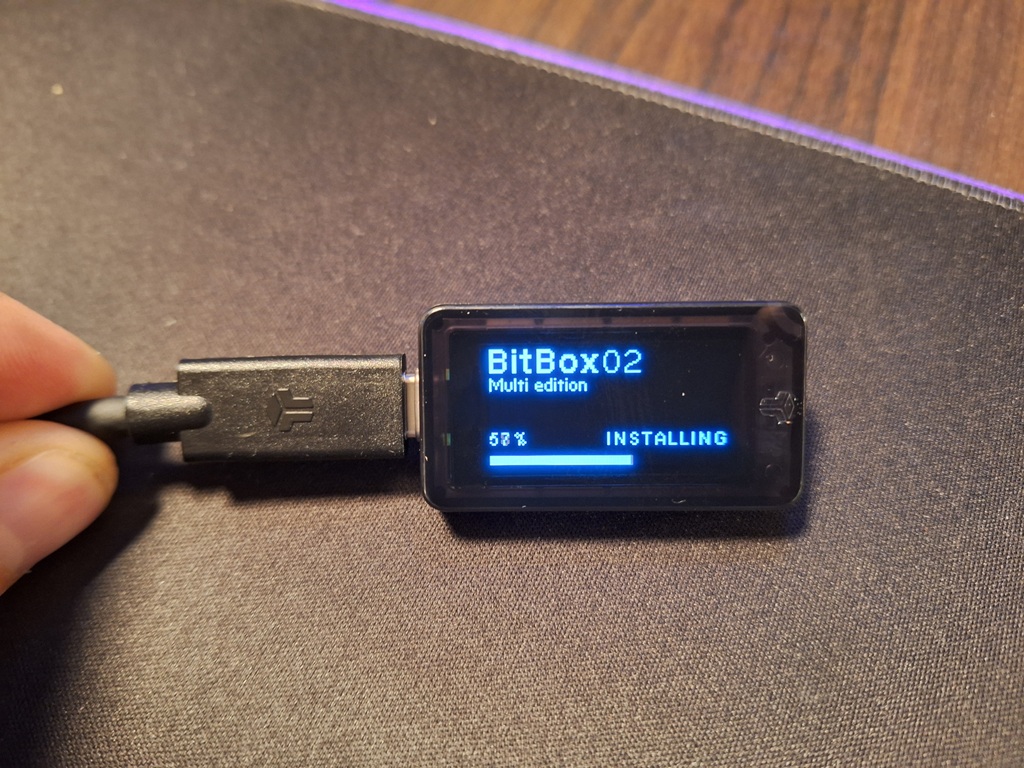
After some research, I ended up with the BitBox02 wallet, a Swiss hardware wallet. This seemed to be the highest security I could find. I hesitated with a Ledger hardware wallet, which is more popular, but the recent issue with Ledger Recover made me uneasy about them.
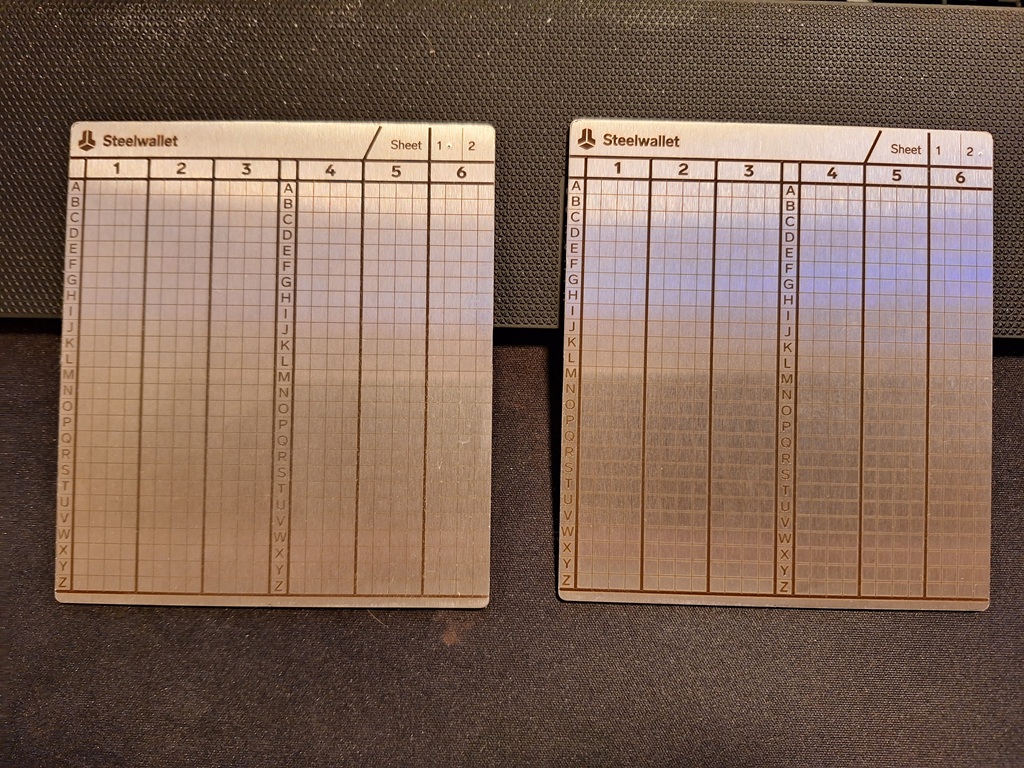
The BitBox02 automatically stores the recovery phrase on a MicroSD card. It is important to note that this backup is not encrypted by default. This SD card should never be plugged into a computer. In the advanced backup options, you can choose to encrypt the SD card as well. Additionally, I stored the recovery on a Steel Wallet. It is literally a couple of steel plates on which we engrave the phrase.
The overall process is rather straightforward:
- Initialize the hardware wallet and protect it with a password
- Store the recovery phrase on the SD card (automatic)
- Store the recovery phrase on the Steelwallet (manual)
- Use the BitBox app to get your BTC or ETH address
- Send the BTC or ETH from Swissborg to your new wallet
- Wait until the transaction is confirmed (a transaction needs 6 confirmations to be valid)
- This will take about 10 minutes for ETH and about an hour for BTC
- Repeat until all your transactions are done
After this, it is essential to store the hardware wallet and recovery phrase properly. In our case, we are opting for the safe we already have.
Of course, this is only one strategy. You do not have to follow exactly the same strategy to store your cryptocurrencies. If you have a small amount, it is probably not worth investing in a hardware wallet.
Frequently Asked Questions
What happens if lose my private keys?
If you are using a self-custody wallet, and you lose your private keys, you should be able to recover the private keys from the recovery phrase that you got during the setup process. If you have lost both the private keys and the recovery phrase, you will have lost all your coins.
Can we make custodial wallets safer?
If you are using a custodial wallet, you must take care of your security as well. In this case, anybody accessing your account will have access to your wallet. Therefore, you should have a strong password and use two factors of authentication. If you do not know where to start, I have a guide on securing your online accounts.
However, this only improves your security. You are still exposed to platform risk (hack or fraud, for instance).
In short
Since this article is quite technical, here a few key points to remember to store your cryptocurrencies:
- Cryptocurrencies are always stored on the blockchain, never on your wallet.
- Your wallet stores your private keys.
- Anybody with your private keys can access your coins.
- If you want to increase your security, you should manage your keys yourself.
- Hardware wallets are the ultimate way to store your cryptocurrencies.
- Never take any pictures of your recovery phrase or store it on your computer.
Conclusion
If you plan to invest a significant amount in cryptocurrencies, it is important to know how to store your cryptocurrencies securely. For that, it is essential to know how cryptocurrencies work and that they are not really stored by you, but they are held in the blockchain.
So, you must be careful about your private keys, which is how you access your coins. What you want is to control the keys rather than to let a platform control the keys. On the other hand, if you control the keys, you have to be cautious. If you lose the keys, you lose the coins, as simple as that.
Therefore, you need to make sure you have enough rigor to do it yourself. If you do not, you are better off with a custodial wallet, ideally a multi-party custodial wallet. While relying on a platform for key management avoids some risks, self-custody introduces the need for extreme caution on your part. You need to be extra careful in handling your keys.
If you opt for such a level of security, you must make sure that your inheritors know how to get access to your coins after your passing. One way to help them would be to cover this information on your disaster file to help your descendants.
The lack of protection of cryptocurrencies is one of the biggest problems of investing in crypto. Therefore, it is more important to take matters into your hands.
Furthermore, the nature of cryptocurrencies makes it so you can fully own the keys to your coins rather than trust it to a platform. This is actually an advantage of cryptocurrencies that you do not have at this scale with stocks.
What do you think? How do you store your cryptocurrencies?
More reading

Cryptocurrencies in nutshell – How do they work?
New to crypto? Learn how cryptocurrencies and blockchain technology work in simple terms before you decide to invest your money.
Should you invest in gold in 2026? How to invest in gold?
Many people invest in gold for its rarity and value. But should you invest in gold yourself? Will gold help you retire?
The cost of owning our house after a year
The true cost of a home. We analyze the hidden costs of owning a house in Switzerland, from maintenance to taxes, and compare it to renting.
Learn easy ways to optimize your finances and save thousands in Switzerland with our exclusive e-book. Learn about the most cost-effective financial services tailored for savvy residents and expats!
Get Your FREE Swiss Money-Saving Guide
Hi Baptiste,
I tried buying bitc (BITC SW) through my IBKR (UK) account and it said Swiss account holders were not allowed to purchase this security. Does this make sense to you? Is there another European listed bitcoin etf I can buy via IBRK ?
Thanks!
Hi John,
Indeed, IBKR does not let Swiss investors trade in cryptocurrencies ETFs.
However, you can trade in cryptocurrencies directly, through Paxos.
Or if it is “trust” and “ease of use” you are concerned about: you can simply buy BTC on Swissquote or even PostFinance. No need for foreign ETFs.
Good point, with an ETF, you may have the returns, but not the decentralization and self-holding of cryptocurrencies.
The commenters here are right, self-custody comes with risks. I understand many go for the ETF or Swissquote.
Also, in case you die, how does your wife/husband access your crypto? Not an easy thing to solve, much easier to have an ETF.
For those looking into cold storage on a HW wallet, I’d urge you to add a passphrase (25th word), otherwise someone only needs to take a picture of your 24 words steel plate and then the funds are at risk.
Also please don’t try to be super smart by changing a few words or their order. And don’t store your seed online (also not in picture on icloud or on encrypted storage – too unsafe).
Also, instead of a “Steel wallet” where the supplier gets your address data, you could just use a steel plate and emboss it by yourself (there are kits with letters A-Z for a few CHF).
Hi Marco
You need to take estate into account. I use a disaster file for this where I store all information that my wife would need to access everything should I die.
I completely agree with not trying to be smart. Random is best!
25th word is a great idea, but it adds even more complexity to the system.
Regarding your steel wallet comment, I don’t get it. The supplier of the HW wallet will get your address anyway, right?
Yes, I think it’s best to have also have sent everything crypto related not to your home address. Just use office address or a c/o address with a friend. Also use a disposable email address. There were too many customer data breaches which led to fake emails and even letters “from” HW wallet manufactures asking people to “verify their seed phrase”…
I consider a steel plate with the seed too unsafe as any random person finding that plate can steal your funds, that’s why I’d add a passphrase (hidden in a seperate location).
Great idea with the disaster file.
Thanks for sharing. I guess it makes a lot of sense for a person holding a lot of money in crypto to be extra careful since you are the bank. But for most people, I would think that a “simple” 24 passphrase is likely sufficient.
Great summary. So what about Custodial wallet with Swiss platform like Swissquote?
Hi Jeroen
As far as I know, these wallets are safe. Swissborg offers a little more security by using a multi-party custodial wallet, but the difference is likely not huge. It’s not the same as handling the keys yourself , but it’s also less complex.
Thanks Baptiste!
The risks of HW wallets are numerous in my mind: loosing key or phrase, loosing the wallet altogether (remember the 100 million $ dig in the UK), and of course some form of HW issue (almost all HW or part ultimately fails). These to me outweigh the risk of “not your key, not your crypto”. For truly big amounts you xan always spread it ocer various platforms, like >100k cash in accounts at different banks.
That’s a fair point. If you manage the key, you incur another risk: yourself. If you lose the key, you can still recover the keys with the recovery passphrase, but if you lose both you lose everything. It’s essential to balance that risk indeed.
Thanks for the detailed explanation. The hassle with storing the keys is the main reason why I haven’t bought any cryptocurrencies so far. Instead, I started to buy some crypot ETFs when they became available. Even if they come with an extra fee, I believe these are relatively little compared to the huge volatility of such investments. Do you think I’m missing out a lot by not buying cryptocurrencies directly?
Hi Lars
You are not missing out on returns that much. There is some tracking error, and there are some fees. But overall, it seems to be tracking rather well. I think a crypto ETF is fine if you want to track the returns of the crypto market.
However, if you want to use crypto for its decentralized features, then a crypto ETF has nothing of the sort because it’s exactly like a stock, and the coins are not really yours.