
Should You Buy An Electric Car In Switzerland in 2026?
| Updated: |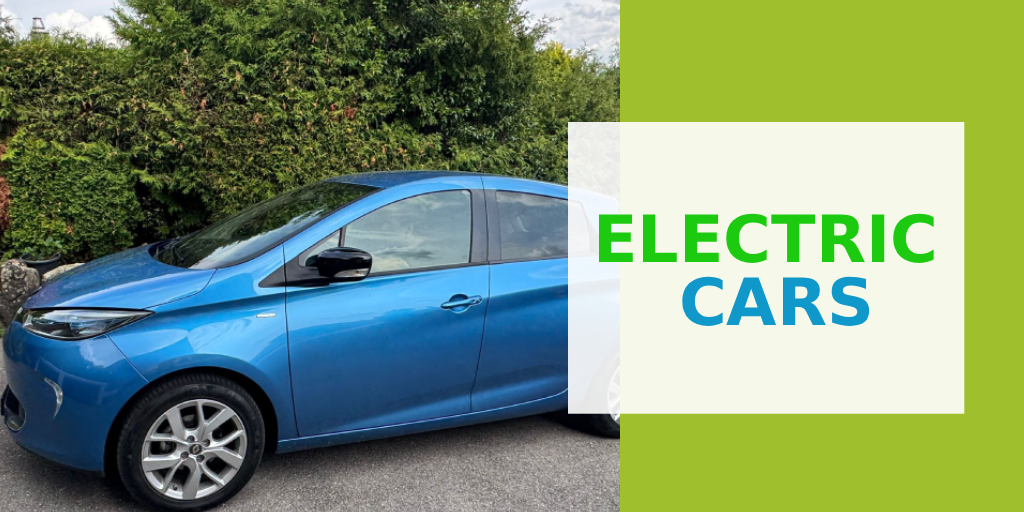
(Disclosure: Some of the links below may be affiliate links)
With the increasing price of gas, people are talking more and more about electric cars again. Despite being wealthy, Switzerland is not one of the best examples for electric car adoption.
But should you buy an electric car? In this article, we delve into this question. By the end of the article, you should have a good idea of whether your next car should be electric or not.
Electric cars
Electrics have a few important differences from a gas-powered car (using an internal combustion engine).
The first difference is how you charge it. Since it is electric, you need access to the power grid instead of going to a gas station.
The second difference is that it needs a longer time to charge. You can refill your gas tank in a few minutes, but it usually takes 30 minutes at least to recharge your electric car.
Another difference is that it is usually cheaper per kilometer to operate an electric car than a gas-powered car.
Finally, if you have access to green energy (basically not coal or gas), an electric car is much more ecological than a car with an internal combustion engine.
There are also some minor differences:
- An electric car is more silent than a gas-powered car
- An electric car is usually still more expensive than a gas car
- An electric car usually requires less maintenance since there are fewer moving parts in the engine.
Now that we have covered the basics, we should see the important questions that you should ask yourself to see whether you should buy an electric car.
Do you have access to a charger?
If you are interested in an electric car, you need to get access to a charger.
There are gas stations everywhere in Switzerland. But there are still not that many electric car chargers available in Switzerland. This is one factor slowing down electric car adoption.
If you are a homeowner, you can install a charger in your garage. In this case, charging will be extremely convenient. If you do not need to charge it too often, you can even charge it directly on 230V. But charging it on a standard plug is very slow (more than 24 hours for a full charge).
On the other hand, if you are a renter, it may be more complicated. In some cases, your landlord may have a charger available for you. But if they do not, you may want to ask your landlord to see if it is possible to get one installed.
If you do not have one at home, you need access to a charger somewhere else. If you are lucky, there is one available at your office. However, if you are not, then you will need to rely on public charging. In this case, you need to see whether you have something practical.
If you have no practical options to charge it, an electric car is likely not for you.
How much will you pay for electricity?
The other important criterion is how much you will pay for electricity.
This will depend entirely on where you plan to recharge your car.
First, if you are going to charge it at home, then you will pay the same price per watt as your home. If you have solar panels, then it becomes even more interesting because it could be free if you optimize your charging times.
Then, if you are a renter, it will depend on your landlord. It is either simply the same price per watt as your general consumption or a different rate if your landlord made special rules for the electric charger. If you can charge it at your office, you should check out the price from your employer.
Finally, if you are going to charge it on the public network, you will need to get the average price of the charging station you will use.
Overall, the cheaper the price of electricity, the more interesting an electric car becomes.
How fast do you need it to charge?
We should also not forget to talk about the speed of charging.
The picture is different if you can charge your electric car all day or all night or if you can only charge for 30 minutes each day. The same applies to long-distance travel: can you afford long charging pauses, or is your time limited?
This will be important to know for two reasons:
- Cars that can charge faster are usually more expensive.
- Charging at very high speed on the public charging grid is usually more expensive than at lower power.
So, generally, it will be cheaper for you to charge at a lower speed. You can absolutely charge your electric car at 11 kW, which is still decently fast. But if you need 150 kW charging, you will have to pay a premium for the car and the electricity.
A good example is to look at M-Charge prices (prices from June 2026):
- Below 22 kW, 0.38 CHF per kWh
- Between 22 kW and 64 kW, 0.48 CHF per kWh
- Between 64 kW and 200 kW, 0.55 CHF per kWh
- Above 200 kW, 0.59 CHF per kWh
So, the difference in cost can be very significant.
Naturally, this criterion will also influence where you can charge since not all public chargers are very high power.
Not all cars can charge at the same speed. In fact, many cars cannot charge at speeds above 100 kW. Therefore, there is no point in paying for 200 kW in this case, for instance. So, you should optimize for the best speed for your car.
Finally, it is also worth mentioning that always using ultra-high power charging can degrade the battery faster. So, you should be careful about that.
How much capacity do you need?
An essential criterion is how much capacity you need in your car. Put another way, how many kilometers do you need to drive without recharging?
This criterion is important because it will help you size the car. The size of the battery is a very critical factor in the price of an electric car. If you need only 200 km at most, you will have many options at a small price. But if you need 500 km of capacity, you will be looking at fewer options with higher prices.
And if you need to do trips that are longer than any battery, like 1000 kilometers, can you wait until your car is recharged, or can you not wait more than 5 minutes? With fast chargers, modern electric cars can be put back to 80% in 30 minutes.
Generally, electric cars are best for relatively lower kilometers. You can get options with large capacity, but you will pay a significant premium.
Are electric cars better for the environment?
For many, the main advantage of an electric car is that they are better for the environment. But is that always true?
During operation, an electric car is only as clean as its energy source. If it is powered by renewable energy, the electric car is very clean. But of course, an electric car powered by a coal power plant will not be clean at all. Additionally, they also have more efficient engines.
While driving, an internal combustion engine emits a lot of CO₂. Additionally, the extraction of oil itself increases the generation of CO₂ for petrol cars. An electric car will not emit any CO₂. However, it has been shown that because of their powerful engines, they often emit more plastic particles from tires.
We should also look at the production of cars, something that many people ignore. Producing an electric car is less environmentally friendly than producing a petrol car. The main issue is the battery that requires many rare materials such as lithium, cobalt, and nickel. On the other hand, producing a standard car is more standard.
The battery also comes into play when recycling. Currently, we do not recycle the batteries well. So it means that all the rare materials are lost and their extraction is not compensated.
Overall, an electric car on green power will be better for the environment over its life. On the other hand, if it uses non-renewable energy to charge, it will actually be worse because of what it took to produce the battery itself. And we should note that a car with a smaller battery will be much better for the environment than a car with a large one.
Are electric cars cheaper to operate?
Electric cars are generally cheaper to operate, but this will depend on your energy.
In Switzerland, we do not get subsidies for electric cars. But the fee to get the license plate is cheaper for electric cars than for petrol cars.
As mentioned before, the price of an electric car will be more expensive at purchase. But the price of maintenance will be lower.
With a modern electric car, you will pay significantly less per kilometer than for a petrol car. This power for the car is easily half of the price of the gas for the car. And if you have access to even cheaper power at home (your solar panels, for instance), it becomes even cheaper.
So, yes, the total cost of ownership is lower for an electric car than for a gas car.
Should you buy an electric car?
Finally, this brings us back to the question: Should you buy an electric car?
If you want to save money in the long term, you should buy an electric car. And if you can operate your car on clean energy, you should also buy an electric car to reduce your carbon footprint.
However, the main barriers for electric cars are practical, not financial or environmental. Indeed, if you have no practical ways of charging your car, it will not be a good experience. For instance, if you live in an apartment and cannot get a charger in your parking spot (or if you have no dedicated parking spot), you will need to rely on the public grid. And currently, Switzerland is not great at this. This could be fine if you can charge at work and mostly use your car for commuting. Otherwise, this may simply be too impractical.
This is one case where homeowners have a significant advantage over renters. It is simpler to install a charging station in your home than in a rented place.
And of course, the range you need will also influence your choice. If you are often driving very long distances, you may not want electric cars. Or you should be prepared to have longer pauses to recharge the car.
So, if you have easy access to charging, electric cars are a great buy. But when depending on the public charging grid, this may not be such a good deal. We will need to see if the charging grid improves.
Our situation
Finally, as an example, we can take our situation. We recently bought an electric car as a second car. We chose a second-hand Zoe with a rather low range of about 230 km under good conditions.
First, we are homeowners, so we can charge at home. Currently, we do not have an electric charging station, but we may have this in the future. So we charge on 230V. Since we have the car for long periods of time, this is not an issue for us.
Then, we have solar panels. So, we try to charge as much as possible when the sun is up. This gives us very cheap power to charge our car.
Finally, since this is our second car, we do not have any issue with capacity. We will never drive more than 200 km (likely not even more than 100 km) with this car.
For us, the electric car was a clear winner for our second car.
In about two and a half years, we will have to change our primary car. At this point, I am already convinced we will go with an electric car. However, we will need a long range for our primary car. We sometimes go to a neighboring country and would like to go there without a recharge in the middle.
Conclusion
Overall, I believe that electric cars are a great alternative to traditional cars. They are cheaper in the long term and have a lower total cost of ownership. We are happy so far with our electric car.
However, we must be rational and realize that electric cars are not perfect. The batteries are not environmentally friendly, and recycling them is not a solved problem. Also, electric cars are only convenient if you can easily charge them. But this is generally only true of homeowners (although renters can sometimes strike a deal with landlords). The public charging grid in Switzerland is not great, so relying entirely on it may not be practical. But things are getting better.
So, if you have easy access to a charging station and you are not driving very long distances with short pauses, electric cars are great!
If you are going to buy a car, you should think about how you will finance your electric car.
What about you? What do you think about electric cars?
More reading

How to work out at home for free in 2026
I have now started to work out at home, almost for free! Find out why and how I am working out at home!
Geo Arbitrage in Switzerland – Improve your finances by moving
In Switzerland, there are huge disparities between cantons and cities. Here is how to use geo arbitrage in Switzerland to optimize your finances!
smile.car Insurance Review 2026 – Pros & Cons
Review of smile.car insurance in Switzerland. See the exact premiums, pros, cons, and when this digital insurer is great and when it is expensive!
Learn easy ways to optimize your finances and save thousands in Switzerland with our exclusive e-book. Learn about the most cost-effective financial services tailored for savvy residents and expats!
Get Your FREE Swiss Money-Saving Guide
Switzerland shall definitely improve its public and semi-public charging infrastructure. Then you are from NL having holidays in Berner Oberland with electric car and have to conclude that entire Simmental valley from Wimmis bei Spiez on has only one public high speed charger, I mean at least 150 kW. And it is not in the wealthy tourist hotspots like Gstaad or Lenk. Being on a campsite, the next AC charger is 5 km away. Happy I have a car with big range. How can the Swiss ever keep driving up & down their beautiful mountains with big engine big fossil cars, I mean it is 2026 not 2010?!
Good article, I like you focus less on “saving the world” and more on practical aspects.
I think you can consider one if you need to replace your car. Otherwise it doesn’t make financially sense, not even to “save the world”. On the other side, I expect in 5 to 10 years to have a market overhaul caused by Chinese and similar. There is no way an electric car costs more than a petrol or diesel one. There is no value in it.
Hi
Yes, I agree. Changing a good petrol car just to replace it with an electric car does not make sense financially or environmentally. This should be considered when changing cars anyway.
Hey,
i really enjoyed reading the article. We have owned an electric car (used BMW i4) for a while and we love it. I just wanted to leave a couple of thoughts.
While you are correct that manufacturing electric cars has an environmental cost, i don’t think there is any question that EVs are more environmentally friendly than gas cars.
When it comes to recycling, it’s far easier to recycle a battery than a used-up gasoline. The reason why there is not a lot of infrastructure for recycling is mainly because there is not that many batteries to recycle yet. Batteries in vehicles that are not suitable for use in car are first used as a storage for solar panels. And only after that they will be recycled into their base materials.
As most people know, batteries are very expensive so it’s a good business for the manufacturers to be able to recycle their contents.
You mentioned CO2, which is a global issue. The issue is also local polution. EVs produce very little micro particles from breaking, because most of the breaking is regenerative. In fact, most EVs need breaks to be replaced because they rust out because they are not being used very much. These are even more toxic than the exhaust particles. But EVs don’t produce those either.
Another point is a noise pollution. Which if you live near a highway, is very annoying. There is a lot of rich people in Switzerland, and some rich people really love loud cars/bikes.
Another aspect, which is not strictly environmental is the morality of buying the gasoline in the first place. By switching to EVs, we can reduce significantly our dependence on the petrol states. Those states have historically not been very nice people. Russia, Iran etc comes to mind. Even USA nowadays. Instead we will rely on electricity which we can generate locally in more or less environmentally friendly way. The world in general will be a better place when states that profited from extracting Earthly resources will instead need to focus on knowledge work and start education their population and encourage free thinking.
Anyway, these are my thoughts. I hope your FIRE journey goes swiftly and your EV is serving you well.
Have a great day, TH
Thanks for sharing your thoughts, TH! These are very interesting points.
I really hope recycling batteries starts to become the norm and that it gets better. We will see.
It’s true that electric cars are much more silent, that’s really comfortable. I also hate loud cars and bikes, I would love it if everything were quieter.
It’s also good to rely less on other countries, but this means that the electric grid must be upgraded as well. I am not entirely convinced we have the best grid for that.
Regarding braking, are you saying that regenerative braking will generate fewer micro-particles? But brakes need to be replaced more often because they are not used enough?
Regarding breaking, yes. Your EV is, most of the time, using the electric motor to slow down. This does not use the break pads at all, but instead uses the motor in a opposite direction which actually recharges your battery as well. It’s called `regenerative breaking` if you want to look up more info. It’s actually very old tech – it is what mild hybrids use to improve efficiency in (especially in city traffic). Instead of wasting energy as heat using regular breaks, it charges the battery and uses it to move the car around.
The downside of this is that break pads are barely used and can start rusting because there is no fricting to remove the rust.
I’m not sure they need to be changed more often – i heard that some cars are clever about it and once in a while disable the regenerative breaking for a while so that the break pads have chance to clean themselves from the rust.
It is also a good idea to, every once in a while, really slam your breaks so that the car is forced to use the actual brakes and not just regen, that way you can clean the rust of the pads and rotors aswell. But you might want to search around how you specific car handles that.
As for the grid, yeah you are right that it needs to be upgraded in most countries. But then again, it’s a local investment into Swiss economy which Switzerland will benefit from. As AC becomes more necessary, improvements to the grid will need to be made regardless.
And of course you can help the situation by having distributed power generation using solar panels and smart charging control. For example our car sits often during the day in the garage. So we don’t really care (most of the time) when exactly its charging. Our electricity provider could choose when to charge the car based on the electricity price and demand (for example there is low demand for electricity, solar panels are generating a lot of power etc). This is already a thing in our house (we do not use it because my wife can charge at work for free and it’s enough for our consumption). If you are interested you can see more details about it here: https://www.ekz.ch/de/angebote/elektromobilitaet/smart-charging.html
This idea can be taken even further and EVs in the future could/will be used as a source of power for the grid, to actually help it more stable. It’s called bi-directional charging and new EVs coming out already support it. Altho the control software is not ready yet. But the idea is that EVs that are parked (as most cars usually are) and plugged into the network could actually use energy stored in their batteries to supply grid with power if it’s necessary / profitable. The owner would get paid for this and it would be an opt-in feature.
All in all, i think EVs are great for the society. They are not perfect of course, the most sustainable way is to walk, ride a bike or a train. But compared to gas cars (except for the price), they are a big improvement IMHO.
Thanks for sharing. I knew about regenerative braking, and I love the idea, but I did not think about the implications of not using the “real” brakes often.
I think most providers have some projects or early implementations of a smart grid now. Groupe E is working on something like that and can already turn off some appliances when needed.
As for V2G, I think we are quite late in Switzerland in this effort and this should be prioritized indeed. Car batteries are huge compared to domestic batteries. And they are likely under-used.
When talking about electric cars, the media continuously focuses on their lower CO2 impact on our planet.
There is little discussion, and even less reliable data, about the environmental impact of producing the components of an electric vehicle or the source of the electricity that will power it.
Even worse, no one talks about the various alternative solutions proposed by individuals or small research teams throughout the history of cars.
The ‘big players’ control the market and the narrative.
Let’s look at the wars going on: the core of each is controlling mineral oil resources.
In the end, ordinary people are left to choose from a limited set of predefined solutions.
Hi alexander
That’s a very good point. The impact of driving the car is easy to establish, but the energy necessary to build the car, and especially the battery, is difficult to quantify, and there are many contradicting sources on the subject.
I did not delve into it too much because it’s difficult to get reliable information.
Hi Baptiste !
I’ve been looking at solar cars for some years now, and I have some points that I don’t often see addressed:
1) the weight of the vehicle. I expect that road maintenance costs will increase as more and more electric vehicles are adopted, and therefore the question of where road maintenance monies will be coming from ?
2) from 1 above, and from the fact that vehicles are getting more and more massive, I think that vehicle license plates should be taxed primarily on vehicular weight (I am probably not making friends here 😀)
3) since electrical cars means the construction can be radically different, why do electrical cars look so much like internal combustion engine (ICE) vehicles ? Why aren’t more innovative designs coming forward ? (Perhaps answering my own question – are automakers too scared to be truly innovative ?)
So, I am going to do a little promotion for a truly innovative company (full disclosure: I have invested in this company, because I truly believe that we must think out of the box for environmental reasons). Take a look at the Aptera vehicle, a 3-wheeler that is so energy efficient that solar panels on the vehicle itself will give about 60km of free charging. Besides being an extremely aerodynamic vehicle, it also weighs under 1 metric ton, which is less than half the weight of the average electric car, and less than most ICE vehicles.
Note: this is NOT a family vehicle, and it is definitely NOT for everyone. But as a commuter vehicle, it will definitely do the job.
Their website is http://www.aptera.us; if you ever consider ordering one, I would appreciate if people use this link (https://aptera.us/reserve?referral_code=a44162) to get $30 off the refundable order fee (again full disclosure: if I get enough people to order, I get a discount on my NEXT Aptera – so I’m not holding my breath 😂)
Thanks Baptiste for your insights and comments !
Hi Francois,
1) They are definitely heavy (too heavy?) cars. And this will wear down the roads. And another impact is that currently, the main source of money for roads is oil taxes, so there will be changes coming.
2) Oil cars are mostly taxed based on their engines; it could make sense to tax electric cars based on their weight.
3) No idea about that! I don’t particularly enjoy the look of any cars, so for me, a car is just a car.
This looks interesting indeed for a two-person household. It’s true that looking into reducing the power consumption is quite important, but overlooked. I believe customers are to blame. Most people buy the biggest cars with the biggest engines, so the trend is just continuing with the electric cars. It would be great to get more efficient cars instead of more powerful cars.
One thing I forgot to ask: Do any of you readers would know where I can get the homologation rules for 3-wheelers ? I spent 2 hours trying to go through CH and EU rules, thought I found the relevant pages, then my laptop died and couldn’t find the pages anymore….
Another thing to add: the 60km solar recharge has been tested in Southern California. Obviously, it will be difficult to match this in CH. On the other hand, in the summer months we get more daylight than California (remember that New York is at the same latitude as Madrid !)
I would go to the local OCN office and ask for more information; I think they should have experts there regarding these rules.
That’s a good point; not all places get the same amount of sun. And it may be an issue in winter with fewer hours of sun per day.
Hello and thanks for your blog on electric cars!
I’m hoping that Switzerland will get a move on and allow bi-directional chargers for electric cars. Then I could also use the car battery as solar energy storage for the house. So the car could, for once, be doing something useful when it is parked in the garage, by supplying the house with electricity during the night with solar energy that was stored in the car battery during the day.
I believe that this is a standard option in Japan.
Hi Alan
As far as I know, bidirectional charging is allowed in Switzerland, but there is no legal framework and apparently some resistance from grid providers. I have got some installers telling me it’s not possible and others telling me it’s possible.
We plan to get a car that supports bidirectional charging, and we hope to have at least a V2H wall charger installed as well (V2G would be nice too). But we will need to research this more.
We’ve been using a Dual Motor Tesla Model 3 since 2019 (>7 years now) as our only car, and couldn’t be happier.
I used to charge at 240V at home from 2019 to 2021, I did best experience ever to not even think about charging/filling the car, just connect it every day, and forget.
From 2021 to 2026, I’ve been using 22kw chargers on the parking my my rental flat. Here, since the parking spot was not guaranteed, we charged once every 3-4 days to an 80%, and we did notice more degradation (now at ~20% degradation). Pricing is not ideal here, with a price that has fluctuated from 0.45 CHF to 0.55 CHF per kwh. It has still consistently beat gasoline by around 50% per km during the last 7 years (it used to be around 70% cheaper when we bought the car, has now stabilized around 40-50% cheaper).
After >7 years of ownership, we are moving to our own flat, with a 11kw charger we own. Pricing should be better, with around 0.26 CHF / kwh if charging outside peak time.
We commonly go to Spain (about twice per year), and charge in the route in about 15-30 minutes depending on the charger. Takes us around 10-15% more time than what it would take us with a petrol car (if we didn’t have to stop apart from filling the tank).
In 1-2 years we want to replace it by another car, with a bigger storage area, and we will again go electric, just probably not Tesla.
Thanks a lot for sharing all the details, Iban.
It’s a very good point about battery degradation. I did not think even 22 kW would be detrimental. It’s good to know. We will also install an 11kW in a few years because 230V is great but can sometimes be sketchy if you forget it for a few days. In our case, we are trying to optimize with solar, but I sometimes forget :)
Any idea what will be the brand of your next car?
I am leasing my first ever electric car, a tesla duel motor long range. I got a quote to fit a home system but at 2000chf it was too expensive (it was a more complicated job then for most I would think). I have 580km of range which may sound excessive but very useful. Trips to Paris were a breeze no problems at all with excellent charging stations (tesla).
Vevey gas migros chargers, 50 kw, 48 ct, really relisble, get a migros charge card makes it super easy, just leave it in the car for all the family.
Hi, Dave,
Thanks for sharing!
When we change our main car in a few years, we will likely get something high range as well.
So you have no charge solution at home at all? That’s impressive.
Hello,
Thank you for your great blogs over the years. I’ve always enjoyed reading your articles.
I work for about 16 years in the lithium ion battery industry, of which 5 years in battery recycling.
The critical metals in the battery, like lithium, cobalt, nickel and manganese are valuable and do get recycled. Your statement above that these metals get lost is not correct. Yields today are around 80-90% and metals can be recycled an infinite amount.
So far, most of the recycling intermediates from Europe (black mass), get further refined in Asia.
Best regards,
Elewout
Hi Elewout
Thanks for sharing this. I am far from an expert in lithium batteries :)
They can be recycled, but are they actually recycled? Often the problem is not that we cannot recycle them; the problem is that it’s too costly to recycle, so things are not recycled.
Did you chose a model where you can rent the battery ? In France, it could be 80euros / month to rent it. It has a cost but it will protect the core component of the vehicle
I actually chose on purpose one car where we could own the battery. I did not do much research, honestly, but it seemed to me to be cheaper to own than to rent. We would pay about 110 CHF per month to rent it out.
Do you think it’s better to rent?