
The cost of owning our house after a year
| Updated: |
(Disclosure: Some of the links below may be affiliate links)
Many people are wondering how much our house is costing us. But it was difficult to answer that question before we lived inside for a while.
After one year spent in our house, I want to summarize all the fees we have paid. I only compare what changed. For instance, we still pay about the same electricity as before, which does not change. But heating is different, and we have to pay for water, for instance.
Hopefully, this will be useful for people wondering how much it costs to live in an owned house.
One-Time Expenses
First, I want to cover one-time expenses. These are expenses related to the purchase of the house. We will not have to pay these expenses again unless we buy a new place.
Withdrawal taxes
The first expense we had to pay was the withdrawal taxes. We used part of our second pillar and part of our third pillar for the down payment on the house.
In total, we have withdrawn the following:
- 50’000 CHF from our second pillar.
- 17’500 CHF from our third pillar.
When we withdraw money from retirement funds, we pay progressive taxes. It means that we pay a low tax rate for a low amount, and as the amount goes higher, so does the tax rate for the higher amounts.
As with everything in the tax system of Switzerland, we have to pay taxes at different levels. This system gets complicated very quickly. For our example, remember that we are married, and in the canton of Fribourg, the numbers will be different for each canton and marital status.
At the federal level, we paid 129.80 CHF. This tax was computed as a fee of 0.9615% of the total 67500 CHF. And we only have to pay 20% of that.
At the cantonal level, we paid 1’475 CHF. The first 5000 CHF is without taxes. The subsequent 40’000 CHF are taxed at 2%, and the following 22’500 CHF are taxed at 3%.
Finally, at the municipality level, we paid 1180 CHF. In our municipality, we pay 0.80 CHF for each 1 CHF taxed by the canton. So, 0.8 times 1’475 CHF is 1180 CHF.
We also paid a fee of 500 CHF for the withdrawal from our second pillar, AXA. This fee is outrageous, way too expensive. It is already a bad second pillar with very low returns and high fees.
So, in total, we paid 3284.80 CHF to withdraw money from our second and third pillars.
House Transfer Fees
The most significant bill, by far, we had to pay was the fee for the official property transfer. I do not understand how this can be so expensive. In my head, all they have to do is change the name on a few items on a computer.
In total, we paid 23’315 CHF for this bill. I still cannot believe that. This fee has two parts, some fixed fees and some proportional fees. By far, the most expensive part is the proportional fees.
For the proportional fees, we paid 1.5% of the house’s value to the canton. And then the same for the municipality. That’s 3% of the value of the house wasted. So, this part accounted for 21’450 CHF. And the rest is all the fixed fees.
Notary Fees
Another large one-time fee is the notary fee. For our house contract, we paid 3400 CHF for the notary. Considering the small amount of work involved, that is already a high fee. However, compared to the land register, this is fair.
Recurring fees
Now, I want to compare the regular living fees inside our owned house to renting our apartment. Regular fees represent the cost of living in our house that will pay for many years to come.
Some of the fees did not change at all. For instance, we still spend about 1200 CHF per year on electricity. We do not use more electricity in the new house, which is excellent. We pay about 400 CHF for water and sewage per year. This bill was included in the charges for the previous apartment and should be about the same.
Mortgage interests
When you own your house, you are replacing rent with mortgage interest. We currently pay 305.10 CHF per month for our mortgage. This amount is only the interest on our debt. Amortization is not an expense since it moves money from cash to real estate. Amortization is not lost and not changing our net worth.
These interests are really low. We are pretty happy about our 5-year mortgage conditions. Once it is finished, we will likely switch to a SARON mortgage. At this point, our interest rate will likely increase.
Over the years, this amount of interest will slightly go down since we do about half of the amortization directly. So each year, our debt decreases slightly, and we pay lower interest.
If you want to learn more, I have an entire article about mortgages in Switzerland.
House insurance
When you rent, you must pay the insurance for objects inside the apartment and civil responsibility. When you own, you still have to pay these two insurances, but you have two extra insurances.
First, you must pay the cantonal building insurance (ECAB in the canton of Fribourg). This building insurance is at the cantonal level, so you do not have to choose which one you use. For this, I pay 312.65 per year.
This first building insurance is optional in some cantons. But since this protects against destroying your house with fire or natural damage, it probably makes sense to keep it.
And we also pay second building insurance for what the cantonal insurance does not cover (windows and things outside of the house). For this, I pay 420.80 CHF.
So, in total, we pay 733.45 CHF per year or 61.12 CHF per month extra by owning our house.
Heating
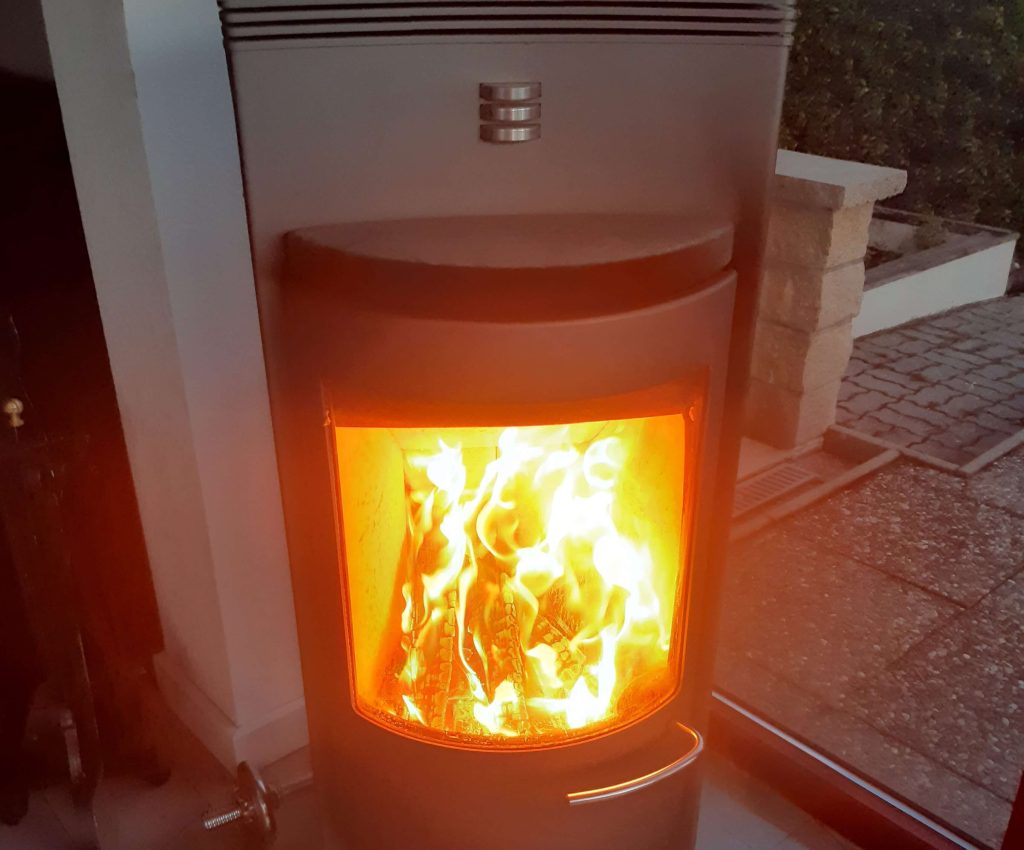
Currently, we pay about 200 CHF per month for heating. However, this is likely to change next year. We are expecting lower than 150 CHF per month.
The reason is that most of our heating bill is still based on the consumption of the previous owner, that seemed to be using the heating system quite heavily. So, the bill should be lower once we learn to use the heating system better.
Nevertheless, this is significantly more than we paid before (about 50 CHF per month). But we have a much higher volume of heat.
So, at this point, we pay about 150 CHF more monthly to heat our house than for our apartment.
Taxes
Most people believe that when owning, you pay fewer taxes. But this is incorrect, at least not right now, and not for most people.
When you own, you can deduct your interest payments from your taxable income. So, this will reduce your taxes. In my case, I can deduct 305.10 CHF per month.
However, you must also add a virtual rental income to your taxes. In our case, the tax office evaluated this rental income at 1217 CHF per month. So, this gets added to my taxable income.
So, in total, I have 911.90 CHF extra virtual income per month with the house. With our marginal tax rate of about 40%, I pay 364.76 CHF in additional monthly taxes because of the house.
In the past, this was often different because interest rates were much higher, so you could deduct more money than the rental value.
On top of that, you also need to pay for the property tax. This fee is a percentage of your house value. This percentage depends on your canton. In our case, we pay 0.2% of the taxable value of our house per year. So, we must pay 720 CHF per year extra. This is 60 CHF per month more.
Renting vs Owning
So, with this, we can do a quick summary of buying vs renting in our case.
This table compares with our previous apartment:
| Rented Apartment | Owned House | |
|---|---|---|
| Rent | 1360 | 0 |
| Heating | 0 | 150 |
| Taxes | 0 | 424.76 |
| Mortgage | 0 | 305.10 |
| Insurance | 30 | 91.12 |
| Power | 100 | 100 |
| Total | 1490 | 1070.98 |
In total, we save 419.92 CHF per month by owning our house!
Does that mean that renting is necessarily worse than owning? No! This summary only takes into account the direct costs of each option. But in practice, we also need to consider the opportunity cost of the down payment amount. And, we should not forget maintenance fees that can weigh a lot in the balance.
Also, renting a house in our neighborhood would cost about 2500 CHF. And there are almost no such assets on the market (one of the reasons we bought it in the first place).
Again, this is only what we directly paid for a year!
If you want to see the whole picture, you can see my article about buying vs renting in Switzerland.
Conclusion
This article should give you a good summary of what you can expect to pay for owning a house for an entire year. In practice, this will be different for each household since each house and apartment is different.
Again, this is insufficient to say whether we should buy or rent. The goal was to share the numbers we now have after one year so that people get an idea of what they can expect if they buy a house or apartment.
Overall, we believe we had a good deal with this house. It is not an excellent investment for returns, but it will save us money in the long term. And anyway, we are happy in our house, which is what matters in the end!
If you want to learn more about owning a property, I have a guide on buying a house or apartment in Switzerland.
What about you? How much are you paying for your house per year?
More reading

A short history of Cryptocurrencies
From Bitcoin to today. Explore the history of cryptocurrencies, how they started, and how the market has evolved over the last decade.
philoro Review 2026 – Pros and Cons
philoro is an online shop for gold and precious metals. We review it in detail to see its advantages, disadvantages, and fees.
How to invest in foreign property from Switzerland – The Story of Iain
People are often investing in real estate in their own country, but Iain is investing in foreign properties, from Switzerland and getting great returns!
Learn easy ways to optimize your finances and save thousands in Switzerland with our exclusive e-book. Learn about the most cost-effective financial services tailored for savvy residents and expats!
Get Your FREE Swiss Money-Saving Guide
Dear Baptiste Wicht,
A very nice article and guide on how to assess costs related to real-estate.
I just do however have one disagreement related to your assessment on ammortization. You mentioned that ammortization is not an expense. However, don’t you think there are opportunity costs associated with ammortization, as you could have instead deployed them in market and gained returns on it (similar to downpayment)?
Thank you very much for sharing the costs related to owning!
Regards,
Akshay
Hi Akshay
Thanks :)
It’s a fair point. I think they are not expense because the money is not lost, it’s being moved from one bucket (bank) to another (real estate). But that does not mean it’s a great investment. I agree with you that there is an opportunity cost to it. It’s like a bad investment that only reduces your mortgage interests.
You don’t have to withdraw cash form 2nd and 3rd pillar you can pledge it
Indeed, you can pledge them if your bank agrees.