
Kann Flexibilität Ihren vorzeitigen Ruhestand unterstützen?
| Aktualisiert: |
(Offenlegung: Einige der unten aufgeführten Links können Affiliate-Links sein)
Sollten Sie Ihren vorzeitigen Ruhestand planen, ist es wahrscheinlich, dass Sie sich auf die Methode der Trinity-Studie stützen werden. Bei dieser Strategie entnehmen Sie jährlich einen Prozentsatz Ihres anfänglichen Portfolios, lediglich inflationsbereinigt.
Einige Personen beabsichtigen, eine höhere Entnahmequote anzuwenden und behaupten, dass dies aufgrund ihrer gesteigerten Flexibilität funktioniert. Ist dies tatsächlich der Fall? Kann Flexibilität Ihren vorzeitigen Ruhestand unterstützen? Wir werden diese Frage beantworten, indem wir einige Simulationen mit verschiedenen Flexibilitätsstrategien durchführen.
Was bedeutet Flexibilität?
Beginnen wir mit einer prägnanten Definition dessen, was gemeinhin unter Flexibilität verstanden wird. Wir sprechen hier von der Flexibilität in Bezug auf Ausgaben. Wenn Sie Ihre Ausgaben um 10% reduzieren können, stellt dies ein angemessenes Maß an Flexibilität dar.
Die Idee der Flexibilität im vorzeitigen Ruhestand besteht darin, dass wir in Phasen positiver Entwicklung mehr ausgeben können. Und wenn die Entwicklung ungünstig verläuft, müssen wir weniger ausgeben (unsere Flexibilität nutzen). Auf diese Weise können wir effektiv unsere Entnahmen reduzieren und unsere Erfolgschancen erhöhen.
Aber wann müssen wir flexibel sein? Dies stellt die Hauptproblematik dar. Wir können die Zukunft nicht vorhersehen. Daher müssen wir uns auf Heuristiken verlassen. Heuristiken weisen zwei Problematiken auf:
- Die Flexibilitätsheuristiken könnten uns möglicherweise nicht ausreichend flexibel machen.
- Die Flexibilitätsheuristiken könnten uns dazu veranlassen, zu wenig auszugeben.
Das Problem besteht darin, dass, wenn wir die Heuristik für einen Fall optimieren, wir sie für den anderen Fall verschlechtern. Folglich ist es äußerst schwierig, eine geeignete Heuristik zu entwickeln. Wir werden in diesem Artikel zwei Heuristiken untersuchen, jedoch sind zahlreiche weitere verfügbar.
Die Simulationen
Sollten Sie mit meiner Methode der Durchführung von Simulationen nicht vertraut sein, empfehle ich Ihnen, einen Blick auf meine aktualisierten Ergebnisse der Trinity-Studie zu werfen.
In dieser Simulation werde ich von folgenden Variablen ausgehen:
- Ich werde die Renditen von US-amerikanischen Aktien und Anleihen verwenden
- Ich werde Daten von 1871 bis 2023 verwenden
- In allen meinen Simulationen werde ich monatliche Renditen verwenden
- Jeder Startmonat wird als Simulation verwendet
- Die Entnahmen werden monatlich inflationsbereinigt
- Wir gehen von einer Gesamtkostenquote (TER) von 0,1% für das Portfolio aus
- Das Portfolio wird jährlich rebalanciert
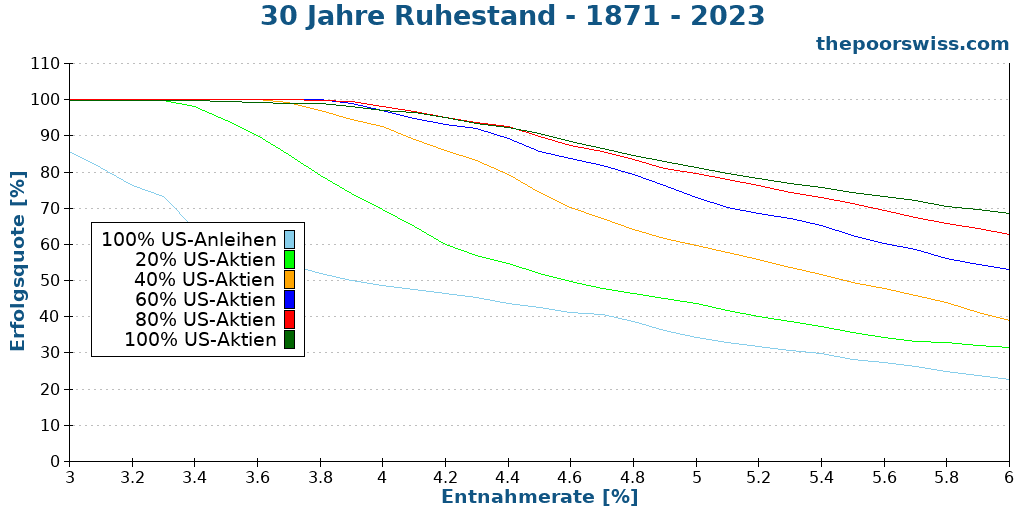
Als Referenz finden Sie hier die Standardergebnisse für multiple Ersparnisse über 30 Jahre Ruhestand:
Flexibilität basierend auf dem anfänglichen Portfolio
Die erste Strategie, die wir betrachten können, besteht darin zu untersuchen, ob wir den aktuellen Portfoliowert mit dem anfänglichen Portfoliowert vergleichen und dies als Schwellenwert nutzen können, um zu entscheiden, wann Flexibilität erforderlich ist. Hierfür werden wir zwei Schwellenwerte verwenden. Bei jedem dieser Schwellenwerte werden wir unsere Ausgaben um einen bestimmten Prozentsatz reduzieren. Beispielsweise könnte eine Strategie wie folgt aussehen:
- Wenn das Portfolio unter 90% des anfänglichen Portfoliowerts fällt, reduzieren wir unsere Ausgaben um 10%
- Wenn das Portfolio unter 80% des anfänglichen Portfoliowerts fällt, reduzieren wir unsere Ausgaben um 20%
Hierbei gibt es vier Parameter (die zwei Schwellenwerte und die zwei Ausgabenänderungen). Ich kann nicht alle Kombinationen testen, daher werden wir einige Kombinationen ausprobieren und sehen, was wir aus den Ergebnissen lernen können.
Hier sind also die Ergebnisse für 30 Jahre Ruhestand mit verschiedenen Strategien. Null ist die Referenz ohne Flexibilität. Die vier Zahlen der Strategien sind der erste Schwellenwert, die erste Ausgabenänderung, der zweite Schwellenwert und die letzte Ausgabenänderung. Alle Strategien verwenden ein Portfolio mit 100% Aktien.
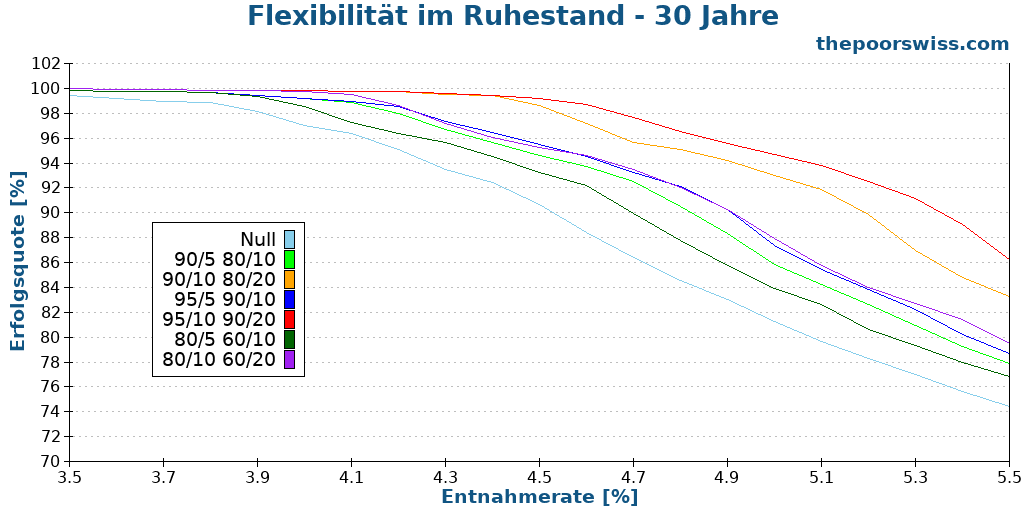
Wir können mehrere interessante Punkte aus diesem ersten Experiment ableiten. Erstens, in allen Fällen verbessert Flexibilität unsere Erfolgsquote. Diese Erkenntnis ist logisch, da wir weniger ausgeben. Der zweite Aspekt, den wir beobachten können, ist, dass Strategien, bei denen wir unsere Ausgaben um 10% und 20% reduzieren, effizienter sind als Strategien, bei denen wir sie um 5% und 10% reduzieren. Schließlich erhöht bei gleicher Flexibilitätsreduktion eine frühere Reduktion der Ausgaben unsere Chancen mehr als ein Abwarten.
Da 30 Jahre eine relativ kurze Zeitspanne darstellen, können wir dies auf 40 Jahre ausdehnen, um zu sehen, was geschieht.
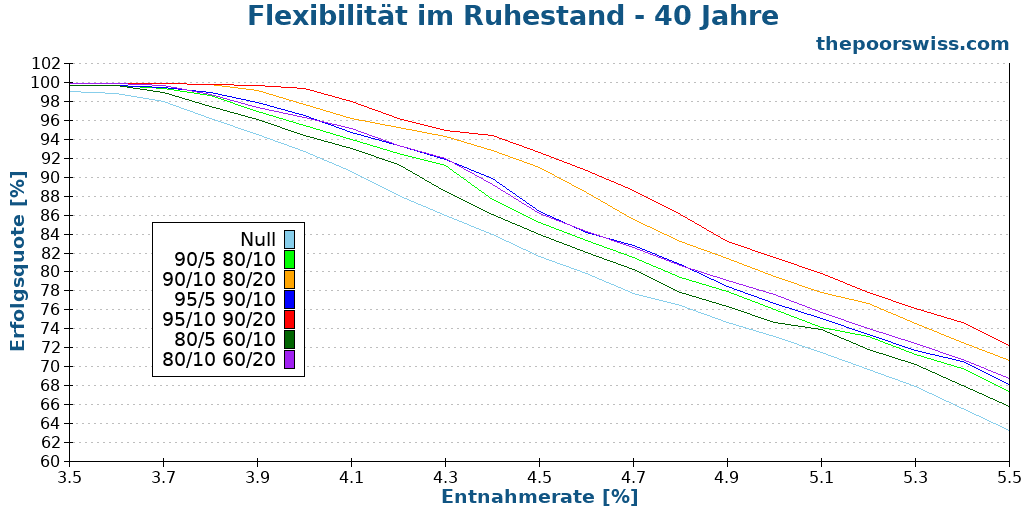
Wir können aus diesem Diagramm die gleichen Schlussfolgerungen ziehen. Allerdings sind die verschiedenen Flexibilitätsstrategien nun weniger wirkungsvoll als zuvor. In der Tat ist der Unterschied zwischen keiner Flexibilität und der besten Flexibilität geringer als zuvor.
Wir können beobachten, ob dasselbe geschieht, wenn wir über 50 Jahre hinausgehen.
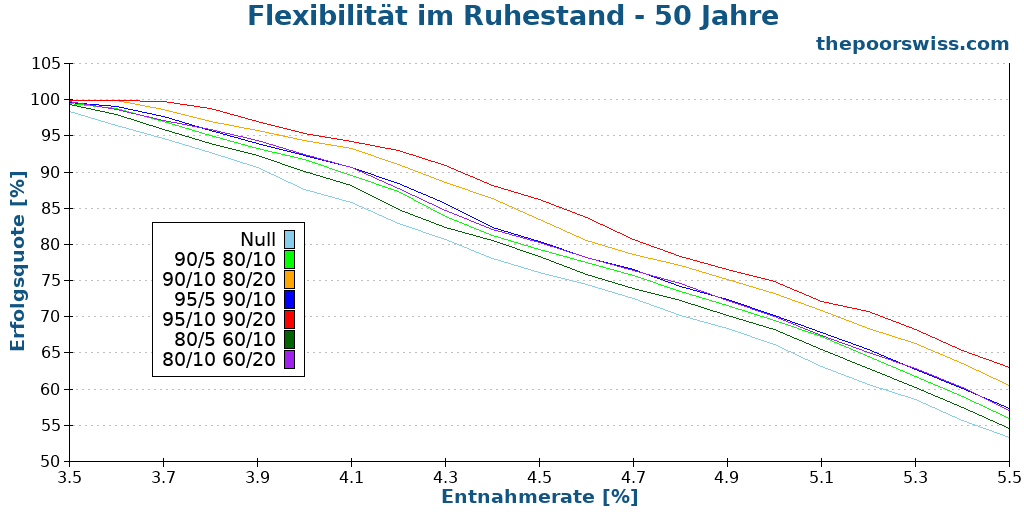
Interessanterweise nimmt der Unterschied zwischen der besten Strategie und der Strategie ohne Flexibilität nicht weiter ab. Es gibt also immer noch einen signifikanten Effekt auf die Erfolgsrate. Natürlich sind die Gesamterfolgsraten ohnehin sehr niedrig, sobald wir bestimmte hohe Entnahmesätze überschreiten.
Nun müssen wir überprüfen, ob die Flexibilitätsregel selbst gut funktioniert. Flexibel zu sein ist gut, wenn es notwendig ist, aber es ist nicht gut, wenn es nicht notwendig ist, da wir dann grundlos weniger ausgeben. Daher müssen wir die Fehler der Regel betrachten. Mit einem Fehler meine ich eine Simulation, bei der wir flexibel wurden, die Simulation aber auch ohne diese Flexibilität erfolgreich gewesen wäre.
Daher hier die Fehlerrate über 40 Jahre.
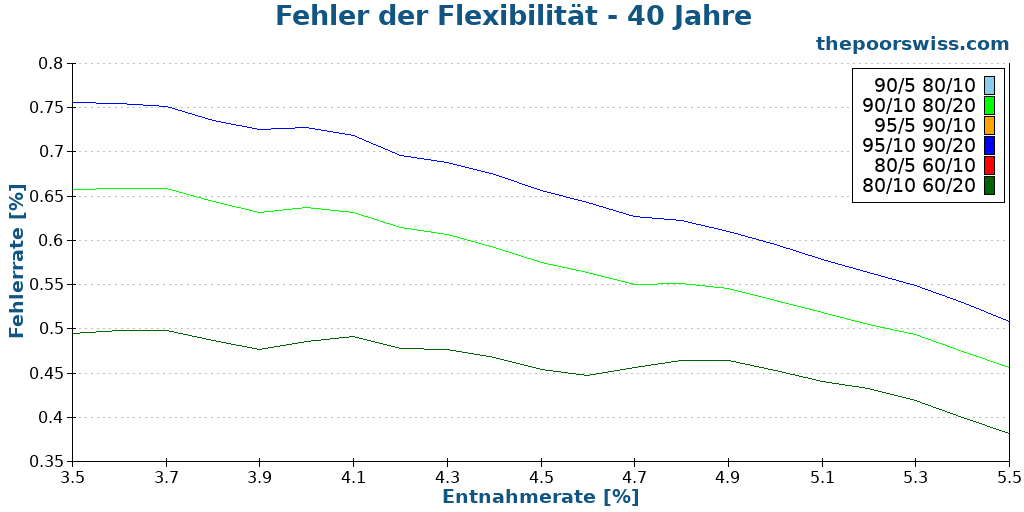
Und hier können wir die Grenzen dieser einfachen flexiblen Heuristik sehen: diese Strategie ist oft falsch. Wir haben beobachtet, dass wir unsere Erfolgsrate signifikant erhöhen können. Aber wir können sehen, dass wir in zahlreichen Fällen unsere Ausgaben ohne triftigen Grund reduzieren würden. Die Fehlerrate hängt von den beiden Schwellenwerten ab. Je aggressiver (früher) die Schwellenwerte sind, desto höher wird die Fehlerrate. Es ist auch logisch, dass die Fehlerrate mit steigender Entnahmerate sinkt, da das Risiko höher wird. Aber selbst im besten Fall sprechen wir von 40% Fehlerquoten.
Die gute Nachricht ist, dass die andere Art von Fehlern (nicht flexibel zu sein, wo wir es hätten sein sollen) bei dieser Heuristik sehr selten sind. Das ergibt Sinn, da diese Heuristik letztendlich sehr oft flexibel ist.
Wir bräuchten also eine viel bessere Heuristik, wenn wir flexibel sein wollen, oder wir müssen bereit sein, viel weniger auszugeben.
Flexibilität basierend auf dem Marktstatus
Die zweite Strategie besteht darin, den Markt selbst zu nutzen, um zu sehen, ob wir uns in einer Korrektur oder in einem Bärenmarkt befinden. Eine Korrektur liegt vor, wenn wir 10% unter dem vorherigen historischen Höchststand liegen, und ein Bärenmarkt, wenn wir 20% unter dem vorherigen Höchststand liegen. Basierend auf diesem Status wenden wir Flexibilität auf unsere Ausgaben an, um zu sehen, wie es funktionieren würde. Um flexibler zu sein, werden wir die gleichen Schwellenwerte wie im ersten Beispiel anwenden.
Hier sind also zunächst die Ergebnisse für 30 Jahre Ruhestand für unsere verschiedenen Strategien. Die Namen sind die gleichen, die wir für die erste Strategie verwendet haben.
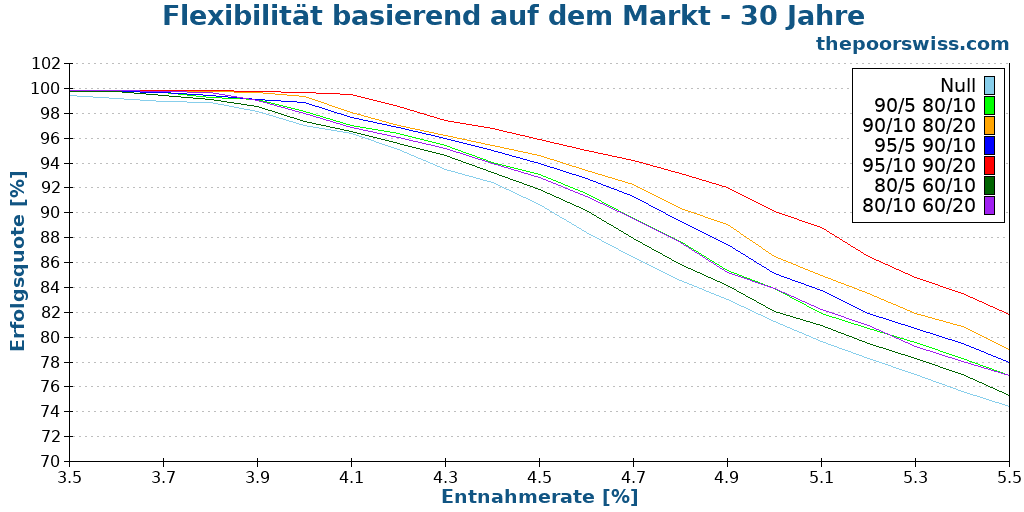
Erneut schneiden alle unsere Strategien besser ab als die Baseline. In diesem Fall ist die Auswirkung unserer Strategien geringer als bei der ersten Strategie. Nichtsdestotrotz können wir immer noch eine schöne Verbesserung der Erfolgsrate unabhängig von der Strategie beobachten. Wie zuvor schneiden Strategien, die Flexibilität früher anwenden, besser ab als Strategien, die länger warten. Und wie zuvor gilt: Je mehr wir bereit sind, unsere Ausgaben zu kürzen, desto mehr erhöhen wir unsere Erfolgschancen.
Wir können fortfahren, indem wir den Ruhestandszeitraum auf 40 Jahre erhöhen.
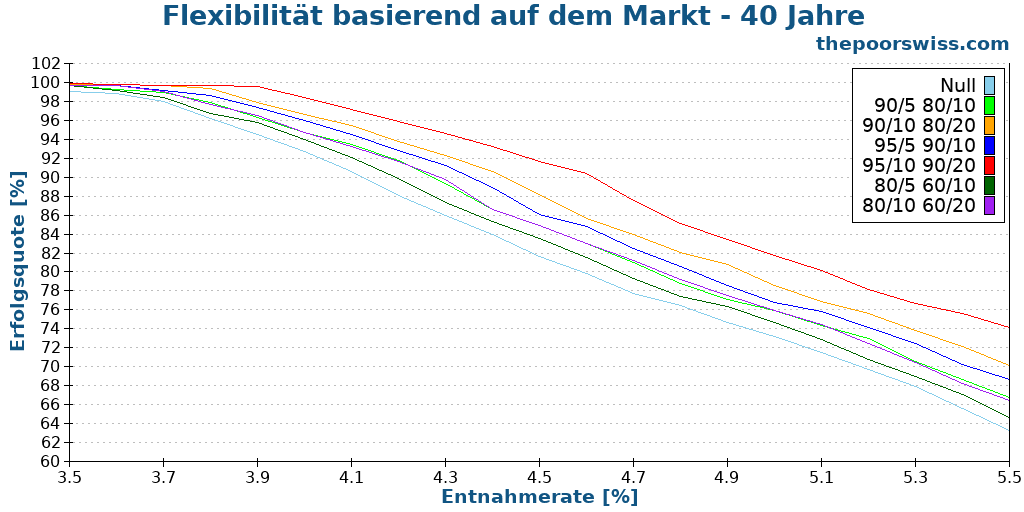
Interessanterweise erhalten wir, sobald wir über 40 Jahre hinausgehen, bessere Ergebnisse als bei der ersten Strategie. Wir könnten im besten Fall immer noch eine 90%ige Erfolgsquote mit einer Entnahmerate von 4,6% erreichen. Die Strategie ohne Flexibilität würde uns nur zu einer Entnahmerate von 4,1% führen.
Schließlich können wir die Ergebnisse für 50 Jahre Ruhestand betrachten.
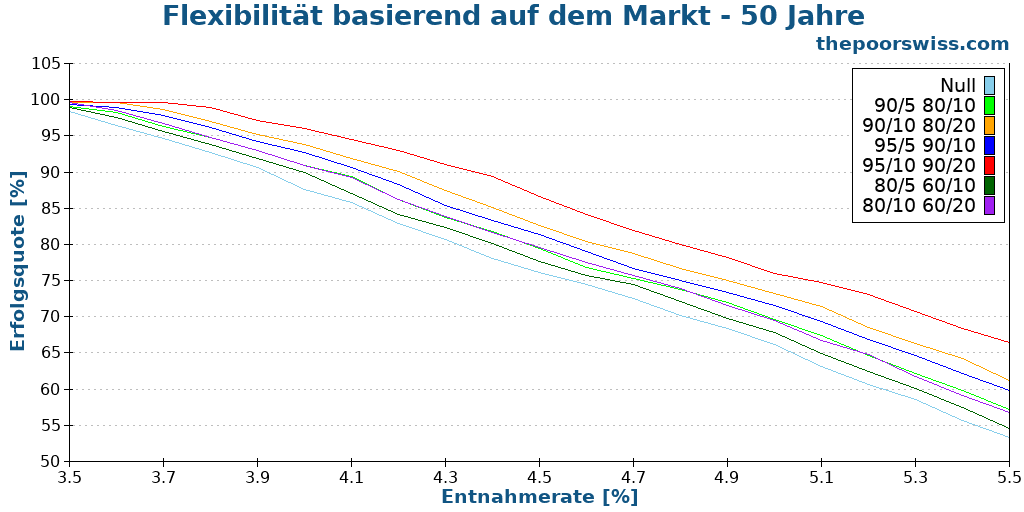
Erneut sind die Ergebnisse besser als bei der Verwendung der ersten Strategie. Bei einer hohen Entnahmerate ist die Verbesserung der Erfolgsrate sehr groß. Wir könnten eine Entnahmerate von 4,4% verwenden und immer noch mehr als 90% Erfolgsrate erzielen.
Bisher scheint diese Strategie recht vielversprechend zu sein. Dann sollten wir die Fehlerrate für diese Simulation betrachten.
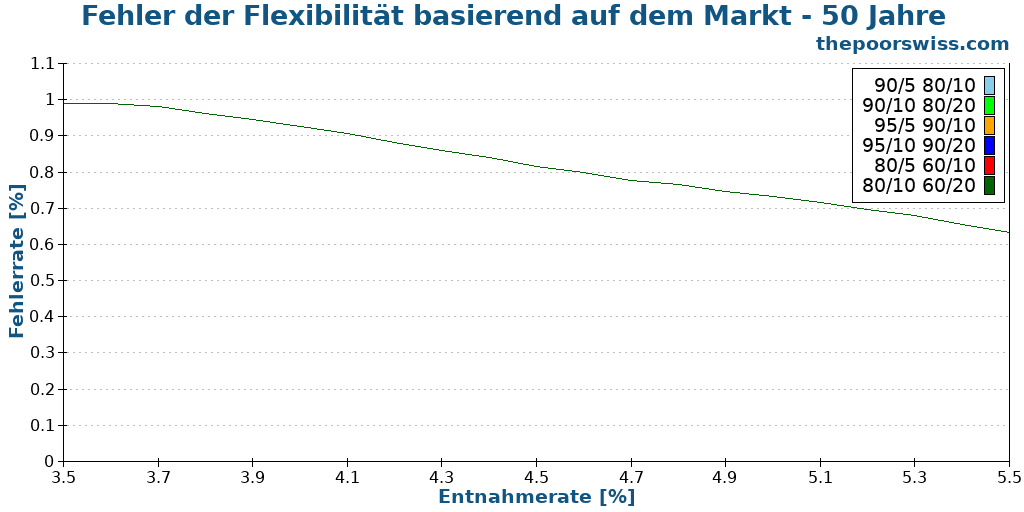
Die Fehlerrate für alle Konfigurationen ist gleich, daher überlappen sie sich alle.
Hier ist das Geheimnis dieser Strategie: sie begeht viel zu viele Fehler. In nahezu jeder Simulation reduzieren wir unsere Ausgaben. Der Grund dafür ist simpel: Märkte werden über einen Zeitraum von 40 Jahren stets signifikante Auf- und Abwärtsbewegungen verzeichnen. Folglich ist die Wahrscheinlichkeit einer Ausgabenreduzierung außerordentlich hoch. Diese Strategie ist daher nahezu identisch mit einer permanenten Ausgabenreduzierung. Es erscheint logisch, dass dies die Erfolgsquote erhöht, da wir effektiv die meiste Zeit die Ausgaben reduzieren werden. Allerdings bedeutet dies auch, dass wir die Ausgaben reduzieren, wenn es nicht notwendig ist.
Insgesamt ist dies eine akzeptable Strategie, jedoch ist sie der vorherigen unterlegen. Mit dieser Strategie müssten wir in zu vielen Fällen die Ausgaben reduzieren. Es ist nicht präzise genug, lediglich den Aktienmarkt zu berücksichtigen. Beispielsweise ist es in den letzten zehn Jahren des Ruhestands unwahrscheinlich, dass ein starker Rückgang am Aktienmarkt uns schadet, da wir wahrscheinlich in den vorangegangenen Jahrzehnten ausreichend akkumuliert haben.
Daher erachte ich diese Strategie als der ersten unterlegen. Der einzige Grund, weshalb diese Strategie höhere Erfolgsquoten erzielt, ist, dass sie permanent zum Einsatz kommt.
Fazit
Kann Flexibilität bei den Ausgaben unsere Erfolgsquote im Ruhestand erhöhen? Ja. Allerdings wird sie auch in Fällen, in denen es nicht notwendig ist, unsere Ausgaben erheblich reduzieren. In der Tat ist es äußerst schwierig, eine adäquate Heuristik zur Entscheidung über Ausgabenkürzungen zu finden. Ebenso schwierig gestaltet sich die Bestimmung des Umfangs der Ausgabenkürzungen. Wir benötigen eine Strategie, die Ausgaben bei Bedarf und in angemessenem Umfang reduziert und dies unterlässt, wenn es nicht erforderlich ist.
Ein weiteres Problem besteht darin, dass wir, sobald wir uns auf Flexibilität verlassen, in der Lage sein müssen, diese reduzierten Ausgaben über einen längeren Zeitraum aufrechtzuerhalten. Es können lange Perioden auftreten, in denen wir signifikant mehr ausgeben als geplant. Und wenn wir dieses Niveau reduzierter Ausgaben nicht aufrechterhalten können, geraten wir in eine Situation, in der die Erfolgsquote sogar schlechter ausfällt als geplant.
Meines Erachtens liegt das eigentliche Problem darin, dass es äußerst schwierig ist, die geeignete Heuristik zur Entscheidung über Ausgabenkürzungen zu finden. Wenn wir eine exzellente Heuristik finden könnten, die zum richtigen Zeitpunkt greift, wäre dies außerordentlich hilfreich. In zukünftigen Artikeln werde ich weitere Strategien untersuchen, und möglicherweise werden wir etwas Interessantes entdecken. Basierend auf den Erkenntnissen dieses Artikels sollte diese Strategie auf dem Verhältnis zwischen dem aktuellen Portfolio und dem Ausgangsportfolio beruhen.
Vorerst beabsichtige ich nicht, derartige Strategien in meinen Ruhestandsplan zu integrieren.
Sollten Sie an solchen Artikeln interessiert sein, möchten Sie möglicherweise mehr über variable Entnahmerate-Strategien lesen, die ähnliche Ziele verfolgen.
Wie üblich, sollten Sie Vorschläge für zukünftige Artikel über die Trinity-Studie haben, teilen Sie mir diese bitte in den Kommentaren unten mit.
Und Sie? Was halten Sie von diesen Flexibilitätsstrategien?
Mehr zum Lesen

Hat sich die 4-Prozent-Regel in den letzten Jahren bewährt?
Funktioniert die 4-Prozent-Regel noch? Wir analysieren die Performance der sicheren Entnahmerate anhand der aktuellsten Marktdaten und wirtschaftlichen Bedingungen.
Das Schweizer FIRE-Paradox – hohes Einkommen – hohe Ausgaben
Die Schweiz gehört zu den besten Orten, um Vermögen aufzubauen. Aber sie gehört auch zu den schlechtesten Orten, um früh in Rente zu gehen – das ist das Schweizer FIRE-Paradox.
Vorruhestand und soziale Sicherheit
Wie können wir die soziale Sicherheit in Szenarien für den Vorruhestand berücksichtigen? Die soziale Sicherheit mag interessant sein, aber sie muss gut geplant sein.
Erfahren Sie, wie Sie Ihre Finanzen ganz einfach optimieren und in der Schweiz Tausende sparen können, mit unserem exklusiven E-Book. Entdecken Sie die kostengünstigsten Finanzdienstleistungen, maßgeschneidert für clevere Einwohner und Expats!
Ihren KOSTENLOSEN Schweizer Sparratgeber